Mời bạn đăng ký để có thể sử dụng đầy đủ các tính năng
Login
Mời bạn đăng nhập để có thể sử dụng đầy đủ các tính năng
Quên mật khẩu
Mời bạn nhập lại email để chúng tôi kiểm tra và cấp lại mật khẩu
Xác thực tài khoản
Vui lòng kiểm tra email và nhập mã xác thực
Lấy mã xác thực tài khoản
Mời bạn nhập lại email đã đăng kí để lấy mã xác thực!
Đặt mật khẩu
Mời bạn đặt nhập mật khẩu để tiếp tục
News detail
15 days of round-the-clock efforts to save a German tourist with septic shock, heart failure, respiratory failure, and multiple organ failure, with no family at his bedside.
While traveling alone in Hanoi, Thomas B., a German national, suddenly developed life-threatening septic shock just hours after experiencing abdominal pain, nausea, and diarrhea.
Prior to the incident, Thomas B. sought medical attention at Hong Ngoc General Hospital after experiencing abdominal pain, nausea, frequent vomiting, and prolonged diarrhea for several days. Based on laboratory testing and imaging findings, physicians identified a severe intestinal infection and advised inpatient treatment. However, assuming the condition was merely a routine gastrointestinal upset and that he was still fit to fly home, the patient chose not to be hospitalized.
Only a few hours later, hotel staff rushed Mr. B back to the emergency department after he became markedly fatigued and developed altered mental status. Upon arrival, his oxygen saturation had fallen to 88% on room air. Further investigations revealed severe multi-organ dysfunction.
Laboratory findings revealed a rapidly deteriorating clinical condition with severe multi-organ dysfunction.
NT-proBNP surged to 7,156 pg/mL, more than 57 times the upper limit of normal, indicating severe acute heart failure.
Procalcitonin reached 61.08 ng/mL, nearly 900 times the normal reference limit, suggesting an exceptionally severe bloodstream infection and overwhelming systemic inflammatory response.
Serum creatinine rose to 493.50 µmol/L, reflecting severe renal impairment.
Arterial blood gas analysis showed a PaCO₂ of 58 mmHg, while the P/F ratio fell to 75 mmHg, approximately one-sixth of the normal value, indicating critical hypoxemia and severe respiratory failure.
Chest CT imaging further revealed bilateral pleural effusions with associated lung collapse (atelectasis).
Based on clinical and laboratory findings, the medical team diagnosed septic shock, severe bloodstream infection, pneumonia complicated by acute respiratory distress syndrome (ARDS), acute heart failure, and acute kidney injury. The patient had already progressed to severe multi-organ failure, a life-threatening condition associated with an exceptionally high risk of death without immediate intensive intervention.
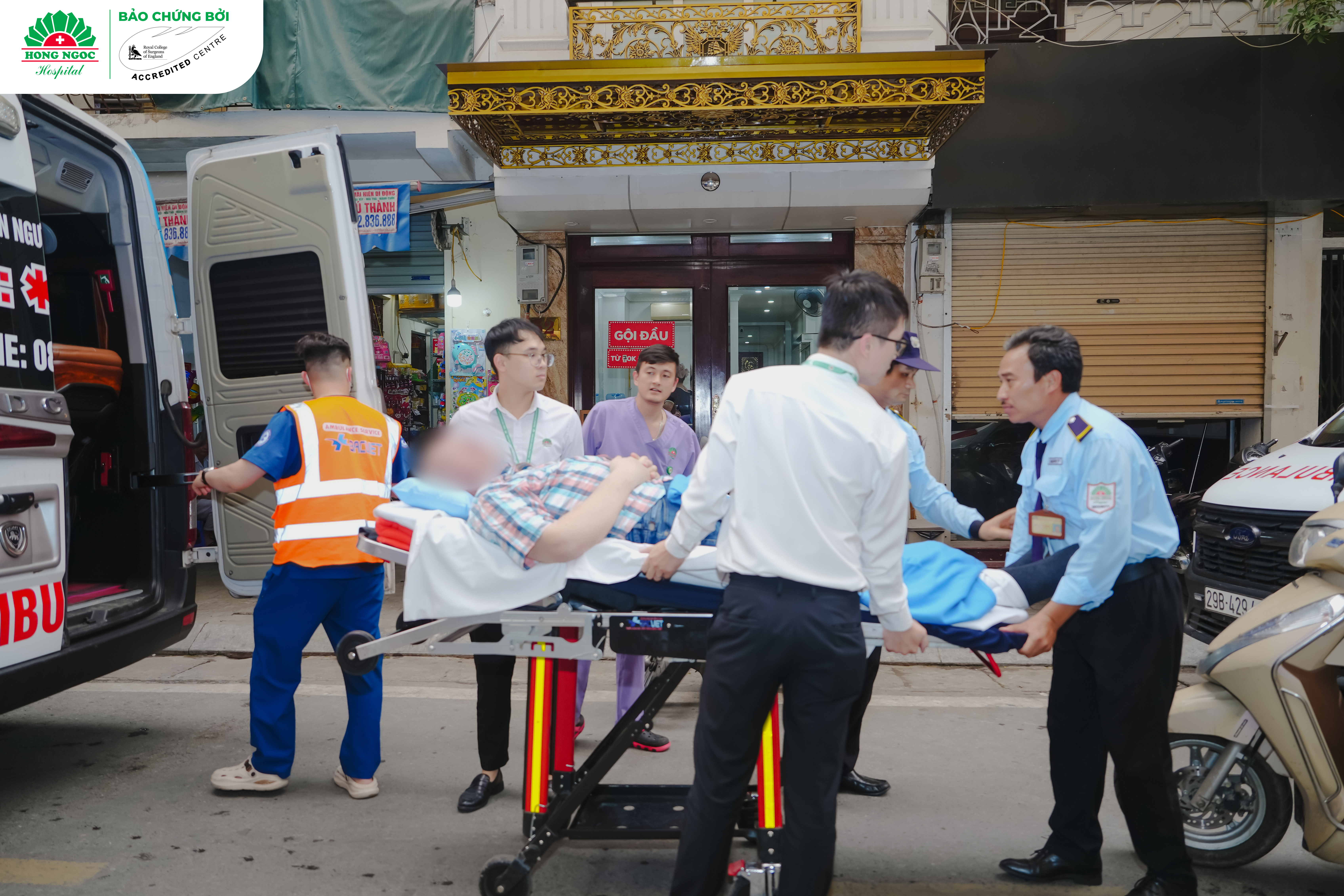
The patient was admitted to the emergency department in critical condition
"In cases of sepsis, the time required to control the infection is critically important, particularly within the first six hours after the condition is identified. However, the patient had already missed this golden window, allowing the disease to progress rapidly and resulting in septic shock and multi-organ failure within a short period of time," said Dr. Pham Thi Ninh Van, Specialist Level I, Department of Intensive Care Medicine, Hong Ngoc General Hospital – 55 Yen Ninh, who was directly involved in the treatment of Thomas B.
Given the patient's rapidly deteriorating condition, the intensive care team immediately launched emergency resuscitation efforts overnight. Treatment included high-flow oxygen therapy, endotracheal intubation, central venous catheterization, and comprehensive intensive care support.
The hospital also worked closely with the embassy to urgently establish contact with the patient's family and discuss his life-threatening condition and treatment options. However, these efforts were complicated by the patient's severe condition. With reduced consciousness, he was unable to provide further personal details that could help identify and reach his relatives.
Although the patient's family had not yet been contacted, the hospital promptly organized a multidisciplinary case conference involving specialists from multiple departments. Advanced resuscitation strategies and high-level critical care techniques were rapidly deployed as the team worked around the clock to save the patient's life.
After 24 hours of continuous monitoring, the patient's condition continued to deteriorate. He developed paroxysmal supraventricular tachycardia with a heart rate of up to 170 beats per minute, accompanied by severe respiratory acidosis. PaCO₂ increased to 61 mmHg, indicating worsening respiratory acidosis, while the P/F ratio remained at just 104 mmHg, showing that blood oxygen levels were still critically low.
"We convened a hospital-wide multidisciplinary consultation and sought additional input from leading central-level hospitals. All participating specialists agreed with the current treatment strategy, which included broad-spectrum antibiotics, continuous renal replacement therapy (CRRT), ongoing sedation and neuromuscular blockade, albumin supplementation, and lung-protective mechanical ventilation combined with prone positioning," said Dr. Pham Thi Ninh Van, Specialist Level I.
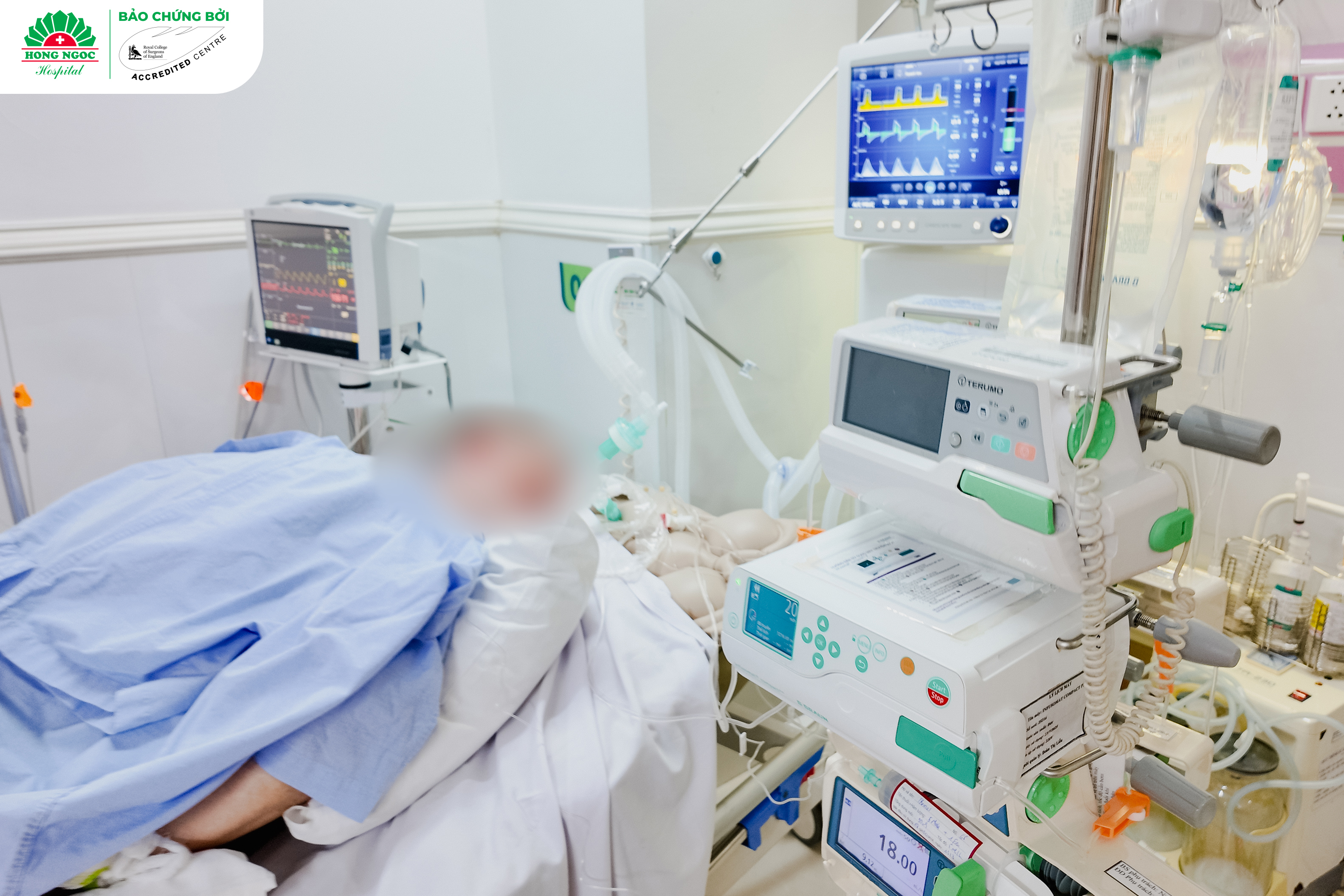
The patient underwent intensive treatment at Hong Ngoc General Hospital, where doctors worked around the clock to fight for his survival.
"At the same time, the intensive care team monitored the patient closely on an hourly basis and remained prepared to initiate ECMO should his respiratory condition continue to deteriorate. ECMO, or extracorporeal membrane oxygenation, is an advanced life-support technique that temporarily replaces the function of the heart and lungs in patients with severe respiratory or circulatory failure. It helps maintain oxygen delivery throughout the body while providing a critical window for recovery," Dr. Van added.
During the next 48 hours, the patient was placed on a PiCCO monitoring system for continuous hemodynamic assessment, cardiac output measurement, and optimization of treatment. Based on data provided by the PiCCO system, physicians adjusted the patient's medications hour by hour to achieve the best possible therapeutic outcomes.
Alongside intensive resuscitation efforts, the hospital's laboratory team urgently performed blood cultures, microbial isolation, and pathogen identification. Blood culture results subsequently confirmed Klebsiella pneumoniae bloodstream infection originating from the gastrointestinal tract.
Klebsiella pneumoniae is a highly drug-resistant pathogen associated with more than 600,000 deaths worldwide each year. Identifying the causative organism enabled physicians to optimize antimicrobial therapy, leading to more effective and targeted treatment.
"The patient was facing both acute heart failure and septic shock, making treatment particularly challenging. If we used overly aggressive therapy, his heart might not tolerate it. On the other hand, insufficient treatment could allow the infection to progress further. That is why we placed him on the PiCCO monitoring system to continuously assess his hemodynamic status and vasopressor requirements, enabling us to precisely tailor medications and fluid therapy down to the milliliter and maintain a delicate balance throughout treatment," said Dr. Pham Thi Ninh Van, Specialist Level I.
Thanks to close monitoring and intensive resuscitative care, the patient's condition began to improve after three days of treatment, and he gradually emerged from the critical phase. He was ultimately able to avoid the need for ECMO.
However, his condition remained serious. Although NT-proBNP had decreased to 2,625 pg/mL, it remained more than 20 times above the normal range, while serum creatinine was still elevated at 343.4 µmol/L, indicating that renal function had not yet fully recovered.
The patient therefore continued to receive continuous renal replacement therapy (CRRT) to support kidney and cardiac function and further improve his respiratory status.
After seven days of intensive treatment, the patient's respiratory function improved significantly, with the P/F ratio rising to 308 mmHg and PaCO₂ returning to normal levels.
However, serum creatinine remained more than twice the normal level, so the patient continued to receive two additional sessions of continuous renal replacement therapy (CRRT) to support renal recovery.
After 15 days of intensive care, Mr. Thomas B was successfully weaned off mechanical ventilation and extubated. He was subsequently able to breathe on his own with oxygen support via nasal cannula.
In the days that followed, his condition improved significantly. He regained the ability to sit up, eat, and speak with his family over the phone.
The patient's condition improved significantly after 15 days of intensive treatment.
After nearly one month of treatment, the patient's inflammatory markers and organ function had almost returned to normal. Procalcitonin fell to 0.09 ng/mL, and serum creatinine decreased to 75.8 µmol/L. With his condition stabilized and organ function restored, the patient was cleared to return home.
According to Dr. Pham Thi Ninh Van, Specialist Level I, this case involved a gastrointestinal infection that progressed with exceptional speed and severity. Within a very short period, the patient developed septic shock, respiratory failure, and multi-organ failure. Such cases require prompt diagnosis and the immediate initiation of intensive resuscitative care during the early stages of the disease in order to improve survival outcomes.
Today, the Department of Intensive Care Medicine at Hong Ngoc General Hospital - 55 Yen Ninh maintains a comprehensive critical care system equipped with advanced technologies, including high-end mechanical ventilators, continuous renal replacement therapy (CRRT), PiCCO hemodynamic monitoring, and ECMO, enabling the team to manage a wide range of life-threatening conditions.
The department has successfully treated numerous patients with septic shock, severe respiratory failure, and multi-organ failure, helping them overcome critical illness and achieve recovery.
While traveling alone in Hanoi, Thomas B., a German national, suddenly developed life-threatening septic shock just hours after experiencing abdominal pain, nausea, and diarrhea.
Prior to the incident, Thomas B. sought medical attention at Hong Ngoc General Hospital after experiencing abdominal pain, nausea, frequent vomiting, and prolonged diarrhea for several days. Based on laboratory testing and imaging findings, physicians identified a severe intestinal infection and advised inpatient treatment. However, assuming the condition was merely a routine gastrointestinal upset and that he was still fit to fly home, the patient chose not to be hospitalized.
Only a few hours later, hotel staff rushed Mr. B back to the emergency department after he became markedly fatigued and developed altered mental status. Upon arrival, his oxygen saturation had fallen to 88% on room air. Further investigations revealed severe multi-organ dysfunction.
Laboratory findings revealed a rapidly deteriorating clinical condition with severe multi-organ dysfunction.
NT-proBNP surged to 7,156 pg/mL, more than 57 times the upper limit of normal, indicating severe acute heart failure.
Procalcitonin reached 61.08 ng/mL, nearly 900 times the normal reference limit, suggesting an exceptionally severe bloodstream infection and overwhelming systemic inflammatory response.
Serum creatinine rose to 493.50 µmol/L, reflecting severe renal impairment.
Arterial blood gas analysis showed a PaCO₂ of 58 mmHg, while the P/F ratio fell to 75 mmHg, approximately one-sixth of the normal value, indicating critical hypoxemia and severe respiratory failure.
Chest CT imaging further revealed bilateral pleural effusions with associated lung collapse (atelectasis).
Based on clinical and laboratory findings, the medical team diagnosed septic shock, severe bloodstream infection, pneumonia complicated by acute respiratory distress syndrome (ARDS), acute heart failure, and acute kidney injury. The patient had already progressed to severe multi-organ failure, a life-threatening condition associated with an exceptionally high risk of death without immediate intensive intervention.
The patient was admitted to the emergency department in critical condition
"In cases of sepsis, the time required to control the infection is critically important, particularly within the first six hours after the condition is identified. However, the patient had already missed this golden window, allowing the disease to progress rapidly and resulting in septic shock and multi-organ failure within a short period of time," said Dr. Pham Thi Ninh Van, Specialist Level I, Department of Intensive Care Medicine, Hong Ngoc General Hospital – 55 Yen Ninh, who was directly involved in the treatment of Thomas B.
Given the patient's rapidly deteriorating condition, the intensive care team immediately launched emergency resuscitation efforts overnight. Treatment included high-flow oxygen therapy, endotracheal intubation, central venous catheterization, and comprehensive intensive care support.
The hospital also worked closely with the embassy to urgently establish contact with the patient's family and discuss his life-threatening condition and treatment options. However, these efforts were complicated by the patient's severe condition. With reduced consciousness, he was unable to provide further personal details that could help identify and reach his relatives.
Although the patient's family had not yet been contacted, the hospital promptly organized a multidisciplinary case conference involving specialists from multiple departments. Advanced resuscitation strategies and high-level critical care techniques were rapidly deployed as the team worked around the clock to save the patient's life.
After 24 hours of continuous monitoring, the patient's condition continued to deteriorate. He developed paroxysmal supraventricular tachycardia with a heart rate of up to 170 beats per minute, accompanied by severe respiratory acidosis. PaCO₂ increased to 61 mmHg, indicating worsening respiratory acidosis, while the P/F ratio remained at just 104 mmHg, showing that blood oxygen levels were still critically low.
"We convened a hospital-wide multidisciplinary consultation and sought additional input from leading central-level hospitals. All participating specialists agreed with the current treatment strategy, which included broad-spectrum antibiotics, continuous renal replacement therapy (CRRT), ongoing sedation and neuromuscular blockade, albumin supplementation, and lung-protective mechanical ventilation combined with prone positioning," said Dr. Pham Thi Ninh Van, Specialist Level I.
The patient underwent intensive treatment at Hong Ngoc General Hospital, where doctors worked around the clock to fight for his survival.
"At the same time, the intensive care team monitored the patient closely on an hourly basis and remained prepared to initiate ECMO should his respiratory condition continue to deteriorate. ECMO, or extracorporeal membrane oxygenation, is an advanced life-support technique that temporarily replaces the function of the heart and lungs in patients with severe respiratory or circulatory failure. It helps maintain oxygen delivery throughout the body while providing a critical window for recovery," Dr. Van added.
During the next 48 hours, the patient was placed on a PiCCO monitoring system for continuous hemodynamic assessment, cardiac output measurement, and optimization of treatment. Based on data provided by the PiCCO system, physicians adjusted the patient's medications hour by hour to achieve the best possible therapeutic outcomes.
Alongside intensive resuscitation efforts, the hospital's laboratory team urgently performed blood cultures, microbial isolation, and pathogen identification. Blood culture results subsequently confirmed Klebsiella pneumoniae bloodstream infection originating from the gastrointestinal tract.
Klebsiella pneumoniae is a highly drug-resistant pathogen associated with more than 600,000 deaths worldwide each year. Identifying the causative organism enabled physicians to optimize antimicrobial therapy, leading to more effective and targeted treatment.
"The patient was facing both acute heart failure and septic shock, making treatment particularly challenging. If we used overly aggressive therapy, his heart might not tolerate it. On the other hand, insufficient treatment could allow the infection to progress further. That is why we placed him on the PiCCO monitoring system to continuously assess his hemodynamic status and vasopressor requirements, enabling us to precisely tailor medications and fluid therapy down to the milliliter and maintain a delicate balance throughout treatment," said Dr. Pham Thi Ninh Van, Specialist Level I.
Thanks to close monitoring and intensive resuscitative care, the patient's condition began to improve after three days of treatment, and he gradually emerged from the critical phase. He was ultimately able to avoid the need for ECMO.
However, his condition remained serious. Although NT-proBNP had decreased to 2,625 pg/mL, it remained more than 20 times above the normal range, while serum creatinine was still elevated at 343.4 µmol/L, indicating that renal function had not yet fully recovered.
The patient therefore continued to receive continuous renal replacement therapy (CRRT) to support kidney and cardiac function and further improve his respiratory status.
After seven days of intensive treatment, the patient's respiratory function improved significantly, with the P/F ratio rising to 308 mmHg and PaCO₂ returning to normal levels.
However, serum creatinine remained more than twice the normal level, so the patient continued to receive two additional sessions of continuous renal replacement therapy (CRRT) to support renal recovery.
After 15 days of intensive care, Mr. Thomas B was successfully weaned off mechanical ventilation and extubated. He was subsequently able to breathe on his own with oxygen support via nasal cannula.
In the days that followed, his condition improved significantly. He regained the ability to sit up, eat, and speak with his family over the phone.
The patient's condition improved significantly after 15 days of intensive treatment.
After nearly one month of treatment, the patient's inflammatory markers and organ function had almost returned to normal. Procalcitonin fell to 0.09 ng/mL, and serum creatinine decreased to 75.8 µmol/L. With his condition stabilized and organ function restored, the patient was cleared to return home.
According to Dr. Pham Thi Ninh Van, Specialist Level I, this case involved a gastrointestinal infection that progressed with exceptional speed and severity. Within a very short period, the patient developed septic shock, respiratory failure, and multi-organ failure. Such cases require prompt diagnosis and the immediate initiation of intensive resuscitative care during the early stages of the disease in order to improve survival outcomes.
Today, the Department of Intensive Care Medicine at Hong Ngoc General Hospital - 55 Yen Ninh maintains a comprehensive critical care system equipped with advanced technologies, including high-end mechanical ventilators, continuous renal replacement therapy (CRRT), PiCCO hemodynamic monitoring, and ECMO, enabling the team to manage a wide range of life-threatening conditions.
The department has successfully treated numerous patients with septic shock, severe respiratory failure, and multi-organ failure, helping them overcome critical illness and achieve recovery.
Để lại câu hỏi của bạn để nhận được giải đáp từ các bác sĩ của Hồng Ngọc
Lorem ipsum dolor
Lorem ipsum dolor sit amet, consectetur adipiscing elit. Mauris odio lectus, pretium faucibus nisi eu, accumsan consectetur orci. In blandit vehicula nisl, vel lacinia ligula finibus a. Donec fermentum rhoncus
Lorem ipsum dolor sit amet, consectetur adipiscing elit. Mauris odio lectus, pretium faucibus nisi eu, accumsan consectetur orci. In blandit vehicula nisl, vel lacinia ligula finibus a. Donec fermentum rhoncus
Lorem ipsum dolor sit amet, consectetur adipiscing elit. Mauris odio lectus, pretium faucibus nisi eu, accumsan consectetur orci. In blandit vehicula nisl, vel lacinia ligula finibus a. Donec fermentum rhoncus
Lorem ipsum dolor sit amet, consectetur adipiscing elit. Mauris odio lectus, pretium faucibus nisi eu, accumsan consectetur orci. In blandit vehicula nisl, vel lacinia ligula finibus a. Donec fermentum rhoncus
Lorem ipsum dolor sit amet, consectetur adipiscing elit. Mauris odio lectus, pretium faucibus nisi eu, accumsan consectetur orci. In blandit vehicula nisl, vel lacinia ligula finibus a. Donec fermentum rhoncus